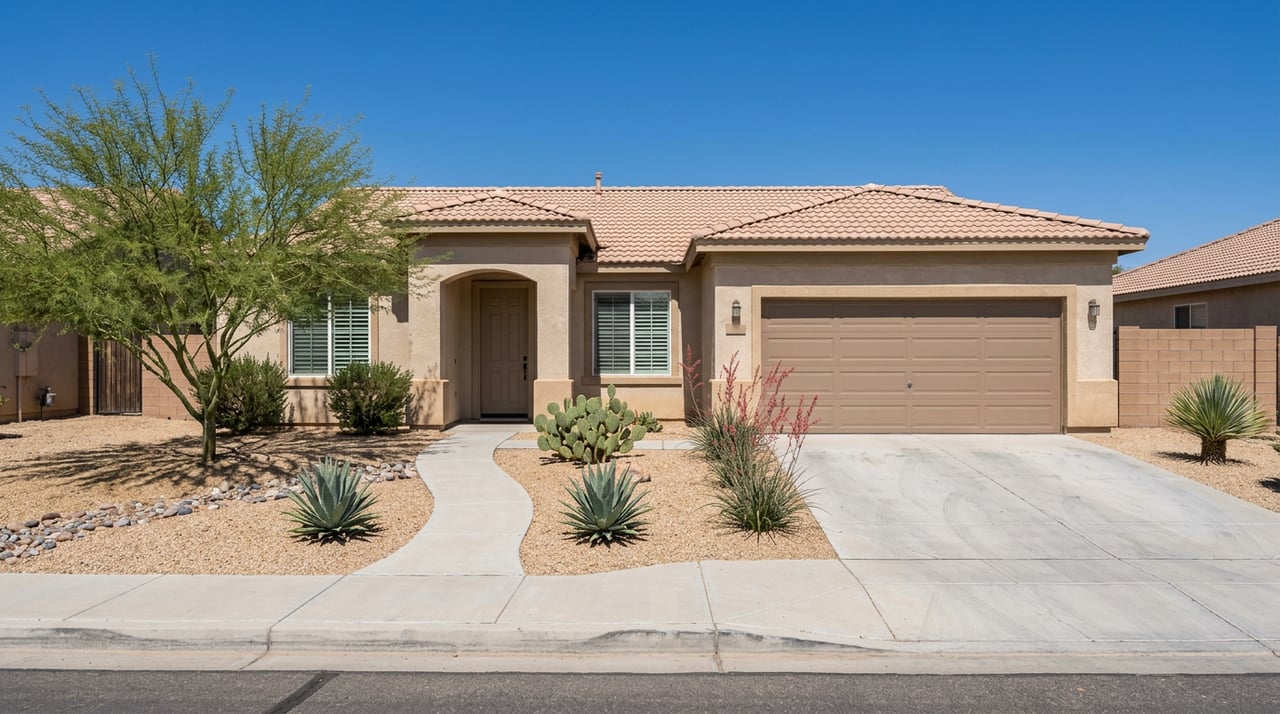
If you are eyeing Goodyear for a buy-and-hold single-family rental, you are not alone. The West Valley has grown fast, but growth alone does not guarantee strong investor returns. What matters is how prices, rents, operating costs, and new supply line up on the deal you buy.
In this guide, you will see the current data that drives demand, how much homes and rents are running, where supply could pressure returns, and a simple pro forma to stress test a typical three-bedroom. You will also get a practical checklist to underwrite your next Goodyear purchase with confidence. Let’s dive in.
Quick answer
Goodyear can work for single-family investors, but it rewards careful underwriting. Population and job growth are solid, regional access is strong, and family-friendly homes stay in demand. At the same time, mid-$400K prices and active build-for-rent competition can keep unlevered cap rates thin. If you want durable returns, you need a sharp buy price, realistic rent comps, tight expense controls, or targeted value-add.
Demand drivers in Goodyear
Population and jobs
City data shows Goodyear added residents quickly in recent years and is expected to keep growing above the regional average. The city’s 2024 estimate is about 116,694 people. Major employers in logistics and warehousing, including Amazon, UPS, Chewy, and Macy’s distribution operations, support a steady base of renters tied to West Valley jobs. You also benefit from regional assets like the Goodyear Ballpark, home to spring training for the Cleveland Guardians and Cincinnati Reds, and quick access to I-10 and Loop 303. These factors support year-round demand and seasonal activity. Sources: the city’s Housing Needs Assessment and the ballpark’s official site provide helpful context (City of Goodyear Housing Needs Assessment, Goodyear Ballpark).
Who rents here
Goodyear is majority owner-occupied, with about 76.8 percent owner and 23.2 percent renter households. That still translates to roughly 9,049 renter households, which is a meaningful tenant base. The owner tilt generally supports resale values, while the renter segment reflects a mix of logistics workers, health care and education professionals, retail employees, and Phoenix-area commuters. Families often prefer three-bedroom homes with a yard, which can command a premium over apartment averages, though they also come with higher operating costs.
Prices, rents, and what that means
Home prices today
Public market snapshots put Goodyear’s typical home value in the mid-$400Ks. Recent portal estimates show a January 2026 median sale price around 485,000, while other indices place values near 464,920. Days to sale hover around two months. The takeaway for investors is simple: acquisition price matters more than headline appreciation in today’s environment. You need to underwrite on current income, not assumptions about rapid price growth.
Rent expectations for SFRs
Apartment-weighted averages in Goodyear sit around the mid-$1,600s to mid-$1,700s. Single-family three-bedroom listings often range from about 1,700 to 2,300 per month, depending on location, age, features, and condition. Always comp within a half mile to a mile and focus on recent, signed leases for the closest match to your floor plan. If your purchase price is in the mid-$400Ks, your rent target needs to reflect competing new supply and on-the-ground absorption in your micro-neighborhood.
What the math shows
Here is a conservative example to frame expectations for a typical three-bedroom:
- Purchase price: 485,000.
- Market rent: 2,000 per month (midpoint of common three-bedroom listings).
- Vacancy assumption: 7 percent.
- Property management: 8 percent of collected rent.
- Property tax: roughly 0.6 percent of purchase price. For local trends and effective ranges, review county data and third-party summaries like Ownwell’s Goodyear page (Maricopa tax trends).
- Insurance: use Arizona averages as a check while you get a real landlord quote. Bankrate and MoneyGeek publish statewide benchmarks (Bankrate on homeowners insurance costs, MoneyGeek on Arizona averages).
- Maintenance and CapEx: conservative placeholders at 1 percent of value for maintenance and 5 percent of collected rent for reserves.
Using those inputs, the example nets about 9,058 per year before debt service. That implies an unlevered cap rate around 1.9 percent and a gross yield near 4.95 percent. The lesson: with mid-$400K pricing, cap rates can be thin unless you improve one or more variables. You can raise effective rents through value-add, buy at a discount, trim operating expenses, or use financing terms that support acceptable cash-on-cash returns.
Supply to watch
New-home pipeline
Goodyear’s new-build activity is significant relative to its size. In the most recent city report window, there were 1,590 permits issued in the prior 12 months, 1,071 closings, 122 inventory homes, and about 2,648 remaining lots across 42 active subdivisions. Strong new-home pipelines reduce the odds of a near-term structural undersupply on the for-sale side. That can cap resale price pressure and influence what investors are willing to pay. Review the city’s Housing Needs Assessment for the latest lot counts and building activity (City of Goodyear Housing Needs Assessment).
Build-for-rent competition
Goodyear has active, institutional build-for-rent communities that compete head-to-head with individual SFR owners. TerraLane delivered a 297‑unit rental home community at Canyon Trails South, and other BTR projects were financed and delivered in 2024–2026, including the 151‑unit Villas Goodyear backed by institutional capital. Professionally managed BTR can compete on amenities, pricing specials, and service, which may cap achievable rents for nearby independent owners. Learn more from recent development coverage (TerraLane at Canyon Trails South coverage).
Vacancy patterns
The city’s data flagged elevated multifamily vacancy around 17.5 percent at the December 2024 snapshot, with two single-lot rental communities totaling 354 units at about 30.2 percent vacancy at that time. That points to local sensitivity when several projects deliver at once. Always check lease-up velocity for BTR or multifamily within a three-mile radius, and adjust your rent and vacancy assumptions to your product type and micro-location. A 7 percent vacancy rate is cited as a healthy multifamily benchmark in the report, but actuals may vary by neighborhood and asset class (City of Goodyear Housing Needs Assessment).
Operating costs that matter
Property taxes and insurance
Maricopa County’s effective property tax burden in Goodyear often ranges around the mid-half-percent band, with variation by property and any special district assessments. Verify the current tax bill and any community facilities districts during due diligence, then model taxes at your expected purchase price. Use state and city averages as a starting point, but base your underwriting on the assessor’s data and closing-prorated estimates. For validation, consult resources like Ownwell’s city page (Goodyear tax trends). For insurance, Arizona premiums are moderate compared to coastal states, but pools, home age, roof type, and claims history can move quotes. Use statewide averages as a check while you gather a true landlord policy quote (Bankrate insurance cost overview, MoneyGeek Arizona average).
Management, maintenance, and pools
Professional property management in the Phoenix metro often runs 8 to 12 percent of collected rent, with leasing fees between half and a full month’s rent. Vendor markups can apply. Get two or three quotes and compare service scopes before you underwrite (Property management fee norms). In the desert climate, AC maintenance, irrigation, and pool care can be notable ongoing costs. Ask for recent utility bills and service contracts if the seller has them, and budget preventive maintenance to cut avoidable downtime.
HOA and legal process
Many Goodyear subdivisions have HOAs. Confirm rental rules, minimum lease terms, application fees, and any restrictions that add friction for tenants. Review the budget, reserves, and assessment history for signals about future dues. Arizona’s eviction timeline is relatively straightforward compared with some states, but always confirm current procedures with local counsel or the county justice court. Landlord resources can help you understand notice periods and court steps before you buy (Arizona eviction process overview).
How to underwrite a Goodyear SFR
Use this quick checklist to keep your analysis tight:
- Pull signed lease comps from the last 3 to 12 months for the same floor plan within 0.5 to 1.0 mile. Focus on effective rents after concessions.
- Ask for subdivision sales comps for the last 6 months and track list-to-sale price adjustments.
- Validate property taxes with the county assessor and check for any special districts or CFD charges. Use a current estimate at your purchase price (Goodyear tax trends).
- Get landlord insurance quotes early, including liability and any pool coverage. Use Arizona averages only as a sanity check (Arizona insurance averages).
- Obtain two or three property management proposals, including monthly fee, leasing fee, renewal fee, and typical vendor markups (Property management fee norms).
- Confirm HOA rental rules, fees, and any assessments. Review CC&Rs and the HOA budget or reserve study.
- Check for new BTR or multifamily deliveries within 3 miles and ask about lease-up speed and current concessions (City development snapshot).
- For new construction, review builder warranties, punch lists, and any unpermitted work disclosures.
Strategy ideas for stronger returns
- Buy below the median. Target sub-median price points or pursue distressed opportunities where entry cap rates are higher.
- Create rent upside. Focus on light value-add that families pay for, such as durable flooring, energy-efficient fixtures, shade, low-maintenance landscaping, or pet-friendly features. Package these with professional marketing to justify the upper end of the rent range.
- Tighten OPEX. Negotiate management terms, standardize vendor work, and schedule seasonal AC servicing. Small wins add up when cap rates are tight.
- Watch the competitive set. If a new BTR community is offering concessions nearby, adjust your rent, leasing timeline, and incentives to stay competitive during lease-up cycles.
- Use financing as a tool. Model cash-on-cash returns under multiple mortgage scenarios and stress test vacancy, rent softness, and unexpected repairs.
Is Goodyear a smart buy-and-hold?
If you want a stable, growing West Valley market with strong transportation access and a sizable family renter base, Goodyear checks those boxes. The challenge is pricing versus achievable rent in the face of active new-home and build-for-rent supply. You can still create durable returns here if you buy well, differentiate your product, and manage expenses. The key is precise, block-level underwriting and a plan that matches today’s competitive landscape.
If you are evaluating a specific address or subdivision, you do not have to guess. You can get local lease comps, HOA details, management quotes, and a clean pro forma that reflects the facts on the ground. When you are ready to run the numbers or tour options, connect with Ashton Kaufman for finance-informed, West Valley guidance.
FAQs
What makes Goodyear attractive for single-family rentals?
- Steady population growth, strong logistics employers, freeway access, and family-friendly housing stock support ongoing rental demand, according to the city’s Housing Needs Assessment.
How do current Goodyear home prices affect returns?
- With typical prices in the mid-$400Ks, unlevered cap rates can be thin unless you secure a lower buy price, raise effective rents through value-add, or reduce operating costs.
Is new supply a risk for SFR owners in Goodyear?
- Yes. The city reports a sizable pipeline of new homes plus active build-for-rent projects. When multiple communities lease up at once, rents can face pressure and vacancies can rise locally.
What rent should I underwrite for a 3-bedroom SFR?
- Many three-bedrooms list around 1,700 to 2,300 per month. Use signed leases from the last 3 to 12 months within 0.5 to 1.0 mile and adjust for age, features, and HOA rules.
Which operating costs most often surprise Goodyear investors?
- AC maintenance, irrigation, and pool care in the summer, HOA fees and rules that add leasing friction, management fees, and insurance or tax variances by property.
How competitive are build-for-rent communities in Goodyear?
- Institutional BTR projects compete directly on amenities, pricing specials, and professional management. Monitor nearby lease-up speed and concessions before setting your rent targets.
What is a reasonable vacancy assumption in Goodyear?
- The city uses about 7 percent as a healthy multifamily benchmark, but actual vacancy varies by micro-location and product type. Verify absorption and adjust your pro forma accordingly.