Wondering whether a new-build or resale home makes more sense in Goodyear? You are not alone. In a city that is still growing and changing, the right choice often comes down to your timeline, your monthly budget, and how much uncertainty you are comfortable with. This guide will help you compare both options in a practical way so you can make a confident decision. Let’s dive in.
Why this choice matters in Goodyear
Goodyear is not a fully built-out city. According to the city’s General Plan 2035, it is about 14% built out and has seven defined growth areas, with a projected population of 239,200 by 2055. That means when you buy here, you are often buying into a city that is still adding homes, roads, retail, and destination projects.
That growth can create opportunity, but it also changes how you compare homes. In some areas, you may buy into a neighborhood where nearby services and commercial spaces are already in place. In others, you may be moving into an area that is still taking shape around you.
Location matters even more in Goodyear because many residents commute outside the city. The General Plan reports that 91.3% of residents commute elsewhere for work and that the average commute is 31.9 minutes. If you are weighing a new-build on the edge of growth against a resale in a more established area, freeway access and day-to-day drive times should be part of the conversation.
Goodyear market context to know
Recent market data showed a median sale price of $486,212 in March 2026 and a median 67 days on market. Census QuickFacts estimates put Goodyear’s median owner-occupied housing value at $441,900 and median gross rent at $1,848. For you as a buyer, that is a reminder that the monthly payment matters just as much as the purchase price.
That is especially true in Goodyear because newer communities may come with extra costs beyond the mortgage. HOA dues, special assessments, and Community Facilities District taxes can all affect what the home really costs each month. A lower advertised price does not always mean a lower monthly payment.
Goodyear is also adding large projects that can shape nearby neighborhoods over time. City materials describe GSQ as a mixed-use development of more than 150 acres, and the city is also seeking master developers for Goodyear Ballpark Village on about 58 acres around the ballpark. If you want a settled environment, resale may feel more predictable. If you like buying into growth, new construction may be appealing.
What new-build usually offers
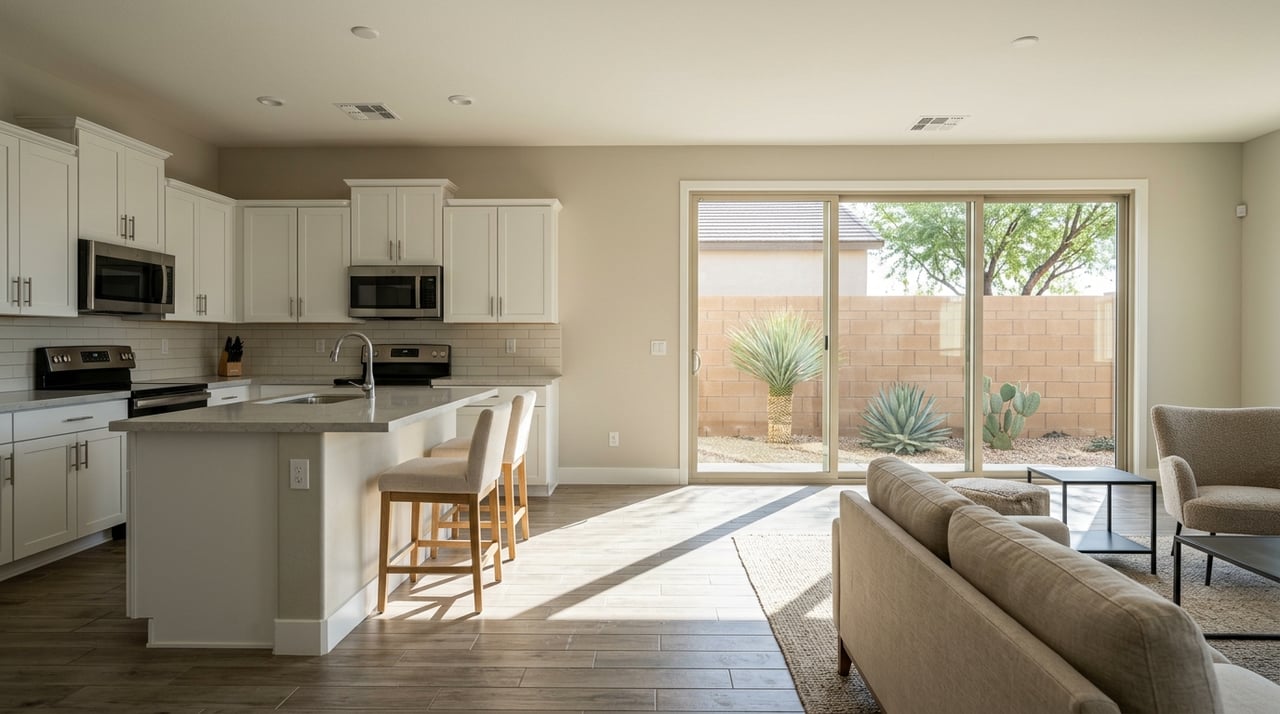
A new-build home often appeals to buyers who want modern layouts, newer systems, and fewer immediate repair questions. Energy-efficient construction can also help with comfort, durability, and utility costs, according to the U.S. Department of Energy’s whole-house guidance. In practical terms, that can mean lower near-term maintenance compared with an older home, though you still need to confirm what features and finishes are included.
Another draw is builder incentives. National builder data from April 2026 showed that many builders were offering sales incentives, and some were also cutting prices. In Goodyear, that means the list price on a new home may not tell the whole story because financing help or closing-cost support can change the net cost.
That said, buying new usually comes with its own set of details to review. Arizona’s Department of Real Estate requires a Public Report for new homes in a subdivision before a purchase contract is signed. That report is designed to cover issues like flooding and drainage, nearby land uses, utilities, common facilities, taxes and assessments, local services, completion assurances, and property owners association details.
What to watch with a new-build
A new-build purchase can feel simpler on the surface, but there are still important financial and timing questions to ask. If the home is not yet complete, the builder may ask for an upfront deposit. You also do not have to use the builder’s affiliated lender, which makes it smart to compare financing options early.
This is where a finance-first review matters. You want to compare not just rate and fees, but also how builder incentives affect your total monthly cost and cash to close. A strong offer on paper is not always the best option if the numbers do not work in your favor.
You should also check whether the property is in a Community Facilities District, or CFD. The city says it currently has 10 CFDs, and CFD debt service and operations are billed through the Maricopa County property tax process. In places like Estrella Mountain Ranch, special assessments can amortize over 25 years, which can have a real impact on your monthly payment.
What resale usually offers
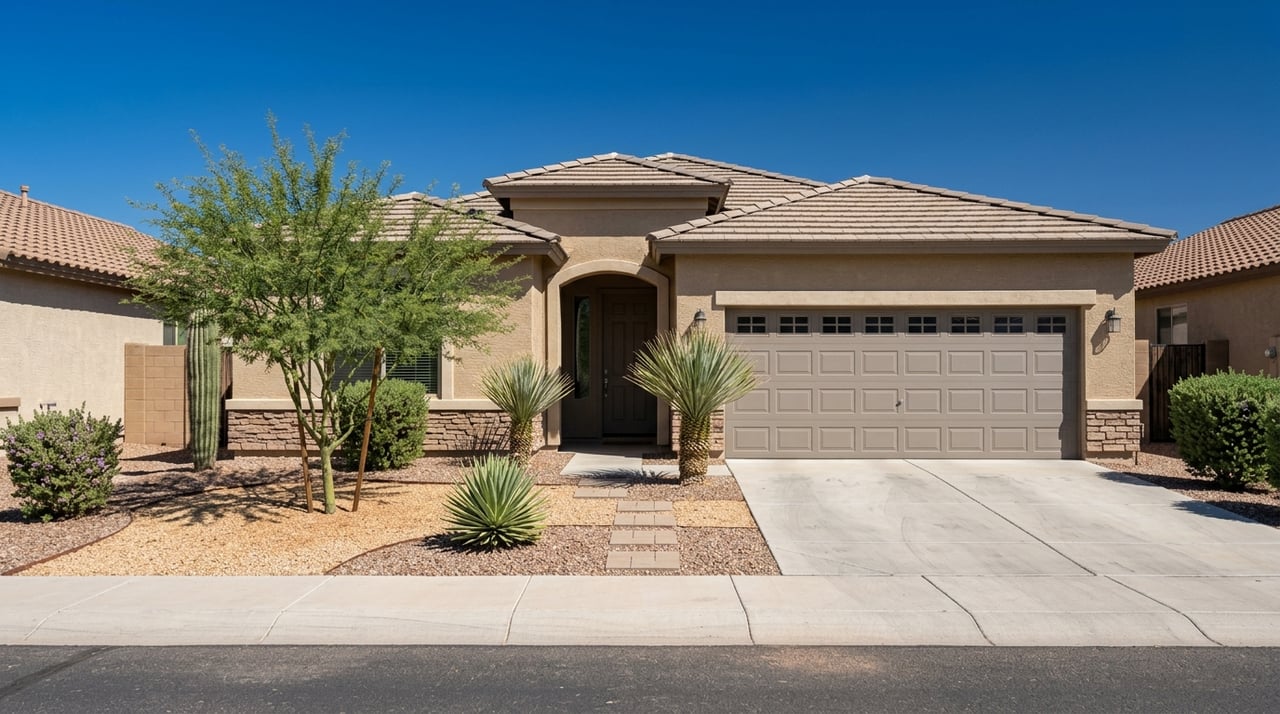
A resale home often works well if you want a faster move and a more established neighborhood feel. Because the home already exists, you can usually evaluate the lot, the street, nearby traffic patterns, and the condition of the surrounding area more directly. That can make resale feel more predictable for buyers who want fewer moving parts.
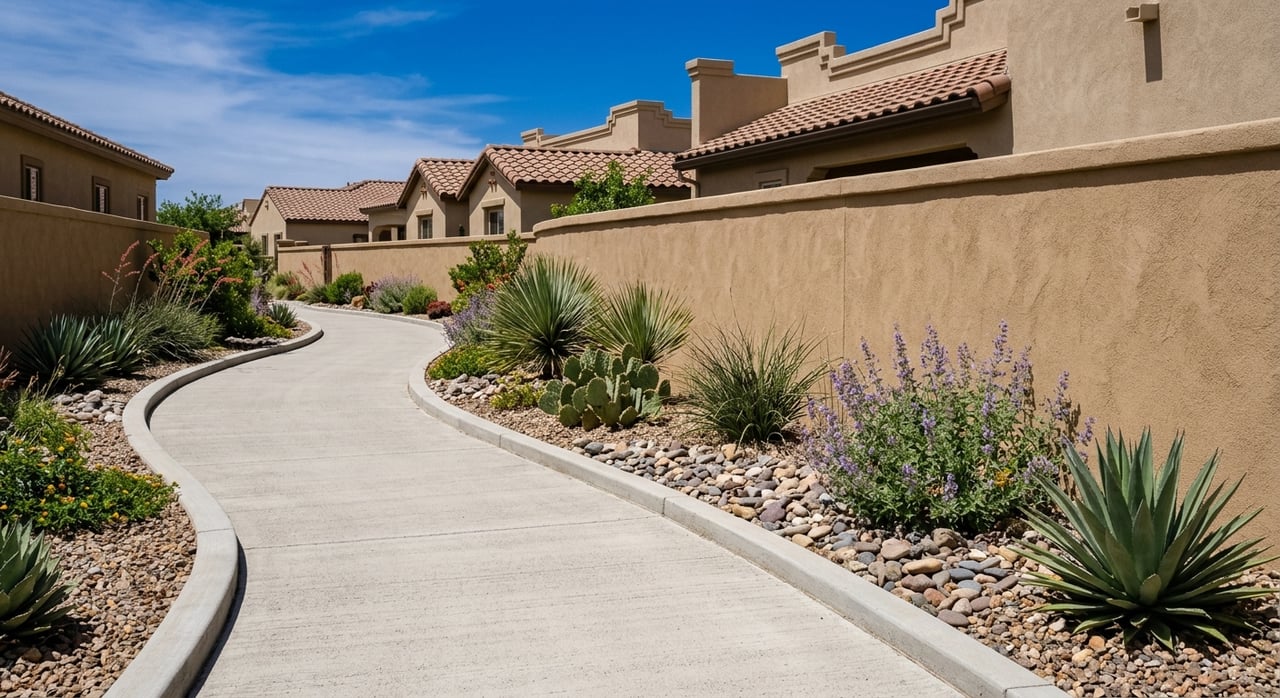
Goodyear’s existing pathway system also adds to that established feel in some areas. The city reports more than 14 miles of concrete multi-use pathway and 12 miles of unpaved pathways, including connections to Palm Valley and PebbleCreek neighborhoods. If you value a neighborhood where amenities and connections are already visible, resale may be easier to judge.
Resale also gives you more of the home’s history upfront. You can review disclosures, inspect the current condition, and compare records to see how the property has aged over time. That can be valuable when you are trying to separate cosmetic appeal from long-term ownership costs.
What to watch with a resale
With resale, the main tradeoff is condition. Arizona’s Department of Real Estate recommends reviewing the seller’s property disclosure statement, watching contract deadlines carefully, and strongly considering a professional home inspection. It also specifically recommends termite inspections and roof inspections when the roof is 10 years old or more.
Those steps matter because two homes that look similar online can have very different maintenance histories. The ADRE Buyer Advisory also recommends verifying square footage and checking more than one source for property details. County assessor records can help with date-built information, though they may reflect effective age if a home has been remodeled.
If you are looking at an older resale built before 1978, lead-based paint disclosures also apply. That is less common in Goodyear’s newer housing stock, but it is still something to keep in mind if your search includes older or heavily remodeled properties.
New-build vs resale in Goodyear
Here is the simplest way to compare the two options.
| Factor | New-Build | Resale |
|---|---|---|
| Move-in timing | May require waiting for construction or phase release | Usually faster occupancy |
| Neighborhood feel | May still be developing around you | Often more established |
| Home systems | Typically newer systems and finishes | Varies by age and upkeep |
| Incentives | Builder incentives may reduce net cost | Less common in the same format |
| Monthly cost | May include CFD taxes, HOA dues, and assessments | May still have HOA dues, but often fewer unknowns |
| Due diligence focus | Public Report, builder deposit, lender comparison, included features | SPDS, inspections, roof age, termite history, records |
Neither option is automatically better. The right fit depends on what matters most to you.
Questions to ask before you choose
If you are comparing homes in Goodyear, these questions can help you make a cleaner side-by-side decision:
- Is the property in a CFD, and how will that affect the monthly payment?
- What HOA dues or special assessments apply?
- If it is a new-build, what incentives are being offered and what is the true net cost after those incentives?
- If it is a new-build, what is the builder deposit and projected completion window?
- Can you use an outside lender instead of the builder’s affiliated lender?
- If it is a resale, what do the seller disclosures, inspection findings, roof age, and termite history show?
- How developed is the surrounding area today, and how much nearby construction is still expected?
- How does the location affect your commute and daily routines?
How to decide which is right for you
A new-build may be the better fit if you want modern systems, possible builder incentives, and are comfortable with an area that may still be evolving. It can also make sense if lower near-term maintenance is a top priority. Just be sure you look beyond base price and account for taxes, assessments, and timing.
A resale home may be the better fit if you want a home that is already complete, a neighborhood that feels more settled, and the ability to inspect the property in its current condition before closing. That can be especially helpful if you want more certainty about what your day-to-day environment will look like right away.
In Goodyear, this is rarely just a house decision. It is also a location, payment, and lifestyle decision. When you compare new-build and resale through that lens, the right answer usually becomes much clearer.
If you want help sorting through the numbers, neighborhood tradeoffs, and timing, Ashton Kaufman can help you compare your options with clear, local guidance.
FAQs
Should you buy a new-build or resale home in Goodyear?
- The better choice depends on your priorities. New-build may suit you if you want modern features and possible builder incentives, while resale may suit you if you want faster occupancy and a more established neighborhood feel.
What is a CFD in Goodyear real estate?
- A Community Facilities District is a local taxing district that can add debt service and operations costs through the property tax bill, which may increase your monthly housing cost.
Are new-build homes in Goodyear cheaper than resale homes?
- Not always. A new-build may come with incentives that improve the net cost, but you still need to compare the full monthly payment, including any CFD taxes, HOA dues, and assessments.
What should you inspect on a resale home in Goodyear?
- Arizona guidance recommends reviewing the seller’s property disclosure statement and strongly considering a professional home inspection, termite inspection, and a roof inspection if the roof is 10 years old or more.
Can you use your own lender for a new-build home in Goodyear?
- Yes. Buyers do not have to use the builder’s affiliated lender, which is why it is smart to compare financing options early.
Why does location matter so much when buying in Goodyear?
- Goodyear is still growing, and many residents commute outside the city. That makes freeway access, surrounding development, and the current stage of the neighborhood important parts of the decision.